

Skin concerns are easy to feel and hard to name. VISIA Skin Analysis gives you a clear, objective picture of what’s actually happening at and below the surface, so every recommendation we make starts from real information, not guesswork. With UV photography, cross-polarized light, and RBX® Technology, we’re able to capture conditions the naked eye can’t detect. At Renovation Medical Spa, we use VISIA before recommending any skincare protocol or treatment so you see the best results.
VISIA is a good fit if you have skin concerns and want to learn more, want an objective baseline before starting treatment, or simply want to know whether what you’re doing at home is actually working. You may be a good fit if:
The cost for VISIA Skin Analysis can range from between $50 and $150, depending on what is included during your appointment.
VISIA Skin Analysis is a cosmetic, elective service and is not covered by insurance. It is self-pay, and we accept a variety of payment methods. We’re happy to walk through all of your options to make your care as accessible as possible.
We offer CareCredit payment plans as a convenient alternative to consumer credit cards, cash, or check for purchases over $200. CareCredit lets you pay over time, often without interest, rather than paying a lump sum before your appointment. Applying takes just a few minutes.
VISIA is straightforward from start to finish, but a little prep goes a long way toward getting the most accurate results from your scan.
Come to your appointment with a clean face with no makeup, SPF, serums, or moisturizers. Product residue can interfere with the imaging and affect accuracy, especially under UV light. If you wear contacts, remove them before the UV portion of the scan. The scan itself takes about 15 minutes.
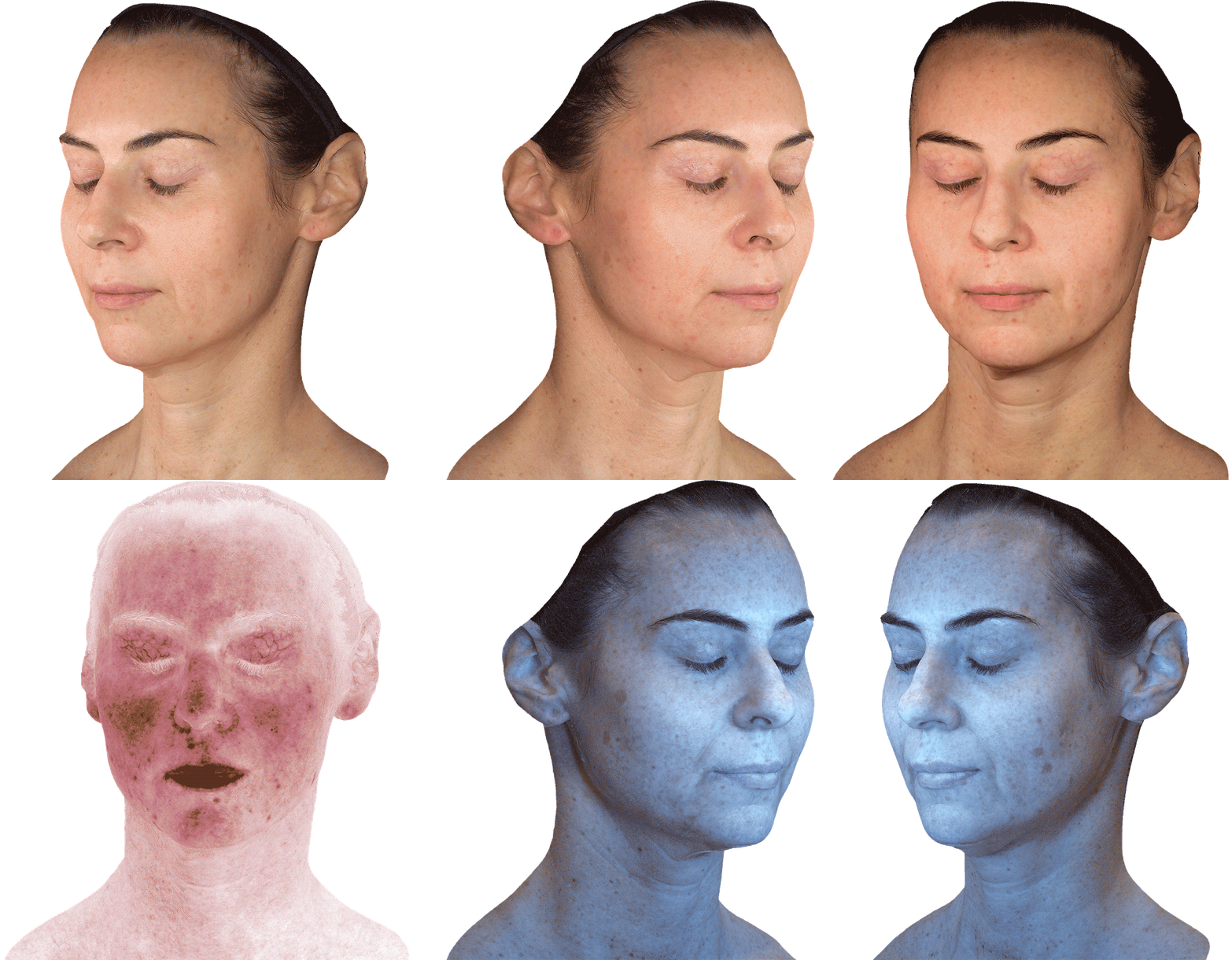
VISIA captures eight distinct skin features using a combination of standard, cross-polarized, and UV lighting:
The scan itself works in this way:
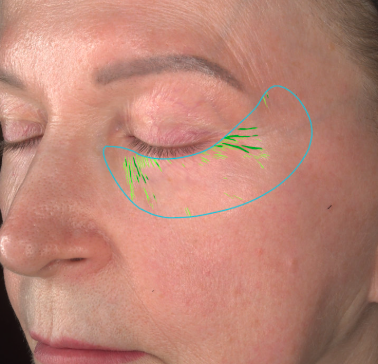
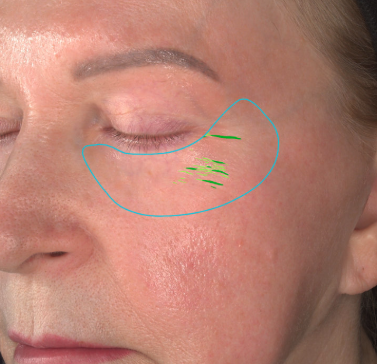
Your VISIA skin analysis results give your provider a detailed breakdown across all eight features, along with a visual map of where each concern appears on your face.
Once the scan is complete, your provider reviews the results with you directly. You’ll see your scores across all eight features and how your skin compares to others in your age range. From there, your provider uses the data to make specific recommendations for skincare products, in-office treatments, or a phased plan built around your specific concerns. If you’re already a patient with us, your VISIA images are saved so future scans give you a measurable record of how your skin responds to treatment over time.
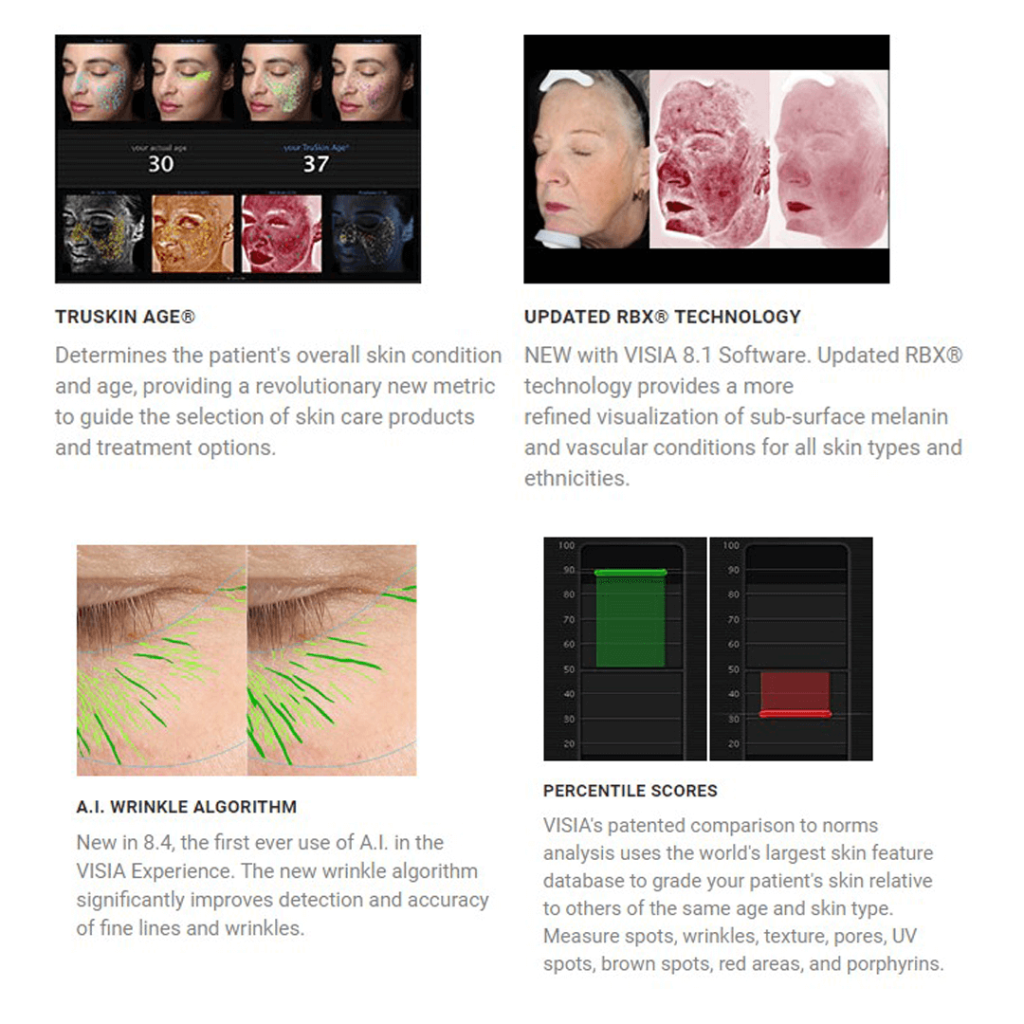
Results are scored against a database of thousands of facial images, letting your provider see how your skin compares to others of a similar age and skin type. That context is useful for setting treatment priorities. When you can see exactly what the scan picked up, recommendations feel grounded in data rather than opinion, which changes your consultation entirely.
The entire procedure takes 2 to 3 hours and you typically won’t need an overnight stay.
VISIA’s results aren’t based on a provider’s impression or experience alone. Here’s how the technology works.
VISIA is a multi-spectral imaging system used in dermatology offices and aesthetic practices worldwide. The process is quick and completely non-invasive. Here’s what happens during your session:
The rotating camera photographs the left side, right side, and front of your face. A live image overlay locks each shot into the same position every time, so your results are consistent and comparable from one visit to the next.
Standard white light captures surface detail. Cross-polarized light cuts through the skin’s surface sheen to reveal what’s happening in deeper layers, including inflammation and vascular conditions. UV light picks up sun damage and bacterial activity that isn’t visible to the naked eye yet.
Canfield’s RBX® Technology separates the red and brown color signals in your skin independently. This matters because redness from a broken capillary and redness from inflammation look similar to the eye but show up differently in the data. Separating them gives your provider a much clearer picture of what’s actually driving each concern.
Your scores are compared against a database of thousands of facial images from people of a similar age and skin type. That context helps your provider prioritize what to address first and gives you a baseline you can measure future progress against.
The whole imaging process takes about five minutes. What you get out of it is a data-backed starting point for every treatment decision going forward, which is a very different conversation than one based on what a provider can see under overhead lighting.
VISIA is a clinical-grade imaging system used in dermatology offices and research settings worldwide. For the best results, your skin should be clean and product-free before the scan so the system can capture consistent, reliable measurements.
It’s worth knowing what VISIA is and isn’t. It measures and scores eight specific skin features. It does not diagnose medical conditions or replace a visit to a dermatologist. At Renovation, the VISIA scan is one part of your consultation, not the whole picture. The data informs your provider’s recommendations, but a trained clinician always reviews and interprets your results alongside your full skin and health history.
The whole imaging process takes about five minutes. What you get out of it is a data-backed starting point for every treatment decision going forward, which is a very different conversation than one based on what a provider can see under overhead lighting.
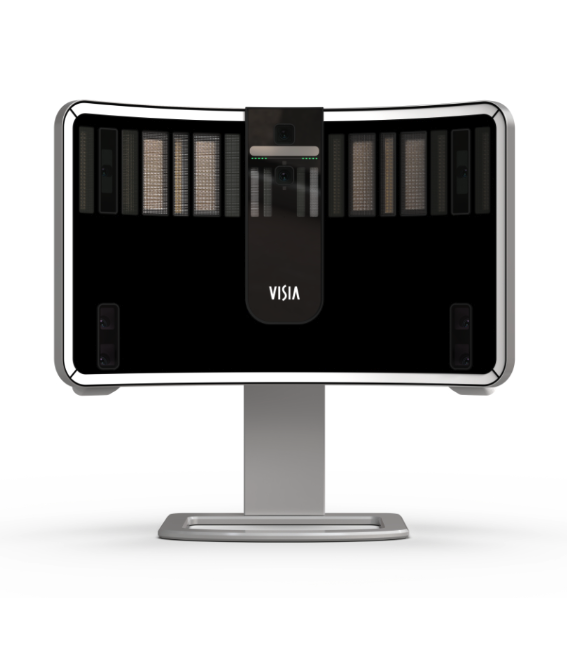
If you’re planning to invest in skincare products, treatments, or a longer-term skin health regimen, VISIA makes that investment more accurate. Rather than starting with a general protocol and adjusting based on how you respond, your provider can build a plan around what the scan shows from the start. For patients who are already curious about treatments like laser resurfacing, BBL, or medical-grade peels, VISIA is a useful place to begin the conversation.
The imaging portion takes about five minutes. The consultation with your provider to review the results and discuss next steps typically runs 20 to 30 minutes depending on how many concerns you want to address.
No. VISIA is an imaging tool for aesthetic skin analysis, not a medical diagnostic device. It measures surface and subsurface skin features like pigmentation, pores, and vascular patterns, but it cannot identify or rule out malignant or pre-malignant lesions. If you have concerns about a specific spot or growth, those should be evaluated by a board-certified dermatologist or physician.
Most providers recommend a follow-up scan every six to twelve months, or after completing a significant treatment course. The value of repeat scans is comparison. Registered imaging makes it possible to measure how your skin has changed at the same facial positions over time, giving you and your provider an objective record of progress rather than a subjective impression.
No. VISIA is entirely non-invasive. There’s no contact with your skin beyond the positioning of your face in the capture system. There’s no numbing required and no downtime afterward.